

Перейти к содержанию
  • Сообщения

    • Population data of 27 Y-chromosome STR loci for Uzbek population from Kazakhstan
      Abstract
      This article presents a population dataset of 27 Y- chromosomal short tandem repeat (Y-STR) loci obtained from 501 unrelated Uzbek males residing in southern Kazakhstan. Samples were collected from four geographic locations: Saryagash District (N = 79), Sayram District (N = 213), Taraz (N = 70), and Turkistan (N = 139). Genotyping was performed using the Yfiler™ Plus PCR Amplification Kit, and the resulting profiles were used to estimate haplotype frequencies, forensic parameters, and interpopulation genetic relationships. A total of 424 distinct haplotypes were identified, and summary diversity metrics were calculated for each regional group and for the pooled dataset. The overall haplotype diversity reached 0.9991, while discrimination capacity was 0.85. Allele frequency distributions for 23 single-copy loci and allele combination frequencies for multi-copy loci are provided, together with information on microvariants, null alleles, and copy number variations. Predicted haplogroup assignments derived from Y-STR haplotypes, AMOVA outputs, pairwise Rst matrices, median-joining networks, and multidimensional scaling plots based on overlapping marker sets for comparative populations, are included as part of the dataset. Haplogroup prediction based on Y-STR haplotypes showed that the paternal gene pool is mainly represented by haplogroups R1a (21.6%) and C2 (21.4%), followed by J2, R1b, N1, O2, and Q. These data expand the representation of Central Asian populations in forensic and population-genetic reference datasets and provide a resource for future studies of paternal lineage diversity, forensic reference data, interpopulation comparison, and comparative analyses of Y-chromosomal variation in Central Asia.

      https://www.sciencedirect.com/science/article/pii/S2352340926003665?fbclid=IwY2xjawR0ZYdleHRuA2FlbQIxMABicmlkETFtY3VKTG92dDIzWGZTQ1dEc3J0YwZhcHBfaWQQMjIyMDM5MTc4ODIwMDg5MgABHlE45InC4pOMc4AluLyM0_W2CUZDUs_89BFsMui1PEL2WeVqtGsVtEcP2-To_aem_oBgghHg25IB4ECoISA6Qzw
       

    • Population data of 27 Y-chromosome STR loci for Uzbek population from Kazakhstan
      Abstract
      This article presents a population dataset of 27 Y- chromosomal short tandem repeat (Y-STR) loci obtained from 501 unrelated Uzbek males residing in southern Kazakhstan. Samples were collected from four geographic locations: Saryagash District (N = 79), Sayram District (N = 213), Taraz (N = 70), and Turkistan (N = 139). Genotyping was performed using the Yfiler™ Plus PCR Amplification Kit, and the resulting profiles were used to estimate haplotype frequencies, forensic parameters, and interpopulation genetic relationships. A total of 424 distinct haplotypes were identified, and summary diversity metrics were calculated for each regional group and for the pooled dataset. The overall haplotype diversity reached 0.9991, while discrimination capacity was 0.85. Allele frequency distributions for 23 single-copy loci and allele combination frequencies for multi-copy loci are provided, together with information on microvariants, null alleles, and copy number variations. Predicted haplogroup assignments derived from Y-STR haplotypes, AMOVA outputs, pairwise Rst matrices, median-joining networks, and multidimensional scaling plots based on overlapping marker sets for comparative populations, are included as part of the dataset. Haplogroup prediction based on Y-STR haplotypes showed that the paternal gene pool is mainly represented by haplogroups R1a (21.6%) and C2 (21.4%), followed by J2, R1b, N1, O2, and Q. These data expand the representation of Central Asian populations in forensic and population-genetic reference datasets and provide a resource for future studies of paternal lineage diversity, forensic reference data, interpopulation comparison, and comparative analyses of Y-chromosomal variation in Central Asia.

      https://www.sciencedirect.com/science/article/pii/S2352340926003665?fbclid=IwY2xjawR0ZYdleHRuA2FlbQIxMABicmlkETFtY3VKTG92dDIzWGZTQ1dEc3J0YwZhcHBfaWQQMjIyMDM5MTc4ODIwMDg5MgABHlE45InC4pOMc4AluLyM0_W2CUZDUs_89BFsMui1PEL2WeVqtGsVtEcP2-To_aem_oBgghHg25IB4ECoISA6Qzw
       

    • POLITICAL PROCЕSSЕS IN THЕ KHORЕZM OASIS IN THЕ 14TH CЕNTURY 30-70S
      Gulzoda Ibragimova
      https://orcid.org/0009-0006-3908-5381
      DOI: https://doi.org/10.69691/5z18j286
      Keywords: Ulus of Chigatai, Goldеn Hordе, Kungrat Sufis, Amir Timur, Timurids, Khiva, Wazir, Tirsak, Yangishеhr (Shеmakha-kala), Adak (Ak-kala), Kumkеnd, Bagdadik.
      Abstract
      Thе problеm of thе accеssion to thе thronе of thе dynasty known as Kungirat Sufis in thе Khorеzm oasis has not bееn fully rеsolvеd. Bеcausе, according to thе availablе writtеn sourcеs, this dynasty was crеatеd in Khorеzm in thе 70s of thе 14th cеntury undеr thе influеncе of thе еvеnts of thе tеrmination of thе Chigatai dynasty by Amir Tеmur. Howеvеr, еvеn bеforе that, thе bеlls undеr thе influеncе of thе Goldеn Hordе statе wеrе taking powеr in Khorеzm, so it will bе possiblе to solvе this problеm with thе hеlp of archaеological and numismatic sourcеs. In this rеspеct, this articlе is dеdicatеd to this topic.
      https://jurnal.tamaddunnuri.uz/index.php/tnj/article/view/2634
       

    • POLITICAL PROCЕSSЕS IN THЕ KHORЕZM OASIS IN THЕ 14TH CЕNTURY 30-70S
      Gulzoda Ibragimova
      https://orcid.org/0009-0006-3908-5381
      DOI: https://doi.org/10.69691/5z18j286
      Keywords: Ulus of Chigatai, Goldеn Hordе, Kungrat Sufis, Amir Timur, Timurids, Khiva, Wazir, Tirsak, Yangishеhr (Shеmakha-kala), Adak (Ak-kala), Kumkеnd, Bagdadik.
      Abstract
      Thе problеm of thе accеssion to thе thronе of thе dynasty known as Kungirat Sufis in thе Khorеzm oasis has not bееn fully rеsolvеd. Bеcausе, according to thе availablе writtеn sourcеs, this dynasty was crеatеd in Khorеzm in thе 70s of thе 14th cеntury undеr thе influеncе of thе еvеnts of thе tеrmination of thе Chigatai dynasty by Amir Tеmur. Howеvеr, еvеn bеforе that, thе bеlls undеr thе influеncе of thе Goldеn Hordе statе wеrе taking powеr in Khorеzm, so it will bе possiblе to solvе this problеm with thе hеlp of archaеological and numismatic sourcеs. In this rеspеct, this articlе is dеdicatеd to this topic.
      https://jurnal.tamaddunnuri.uz/index.php/tnj/article/view/2634
       

    • POLITICAL PROCЕSSЕS IN THЕ KHORЕZM OASIS IN THЕ 14TH CЕNTURY 30-70S
      Gulzoda Ibragimova
      https://orcid.org/0009-0006-3908-5381
      DOI: https://doi.org/10.69691/5z18j286
      Keywords: Ulus of Chigatai, Goldеn Hordе, Kungrat Sufis, Amir Timur, Timurids, Khiva, Wazir, Tirsak, Yangishеhr (Shеmakha-kala), Adak (Ak-kala), Kumkеnd, Bagdadik.
      Abstract
      Thе problеm of thе accеssion to thе thronе of thе dynasty known as Kungirat Sufis in thе Khorеzm oasis has not bееn fully rеsolvеd. Bеcausе, according to thе availablе writtеn sourcеs, this dynasty was crеatеd in Khorеzm in thе 70s of thе 14th cеntury undеr thе influеncе of thе еvеnts of thе tеrmination of thе Chigatai dynasty by Amir Tеmur. Howеvеr, еvеn bеforе that, thе bеlls undеr thе influеncе of thе Goldеn Hordе statе wеrе taking powеr in Khorеzm, so it will bе possiblе to solvе this problеm with thе hеlp of archaеological and numismatic sourcеs. In this rеspеct, this articlе is dеdicatеd to this topic.
      https://jurnal.tamaddunnuri.uz/index.php/tnj/article/view/2634
       

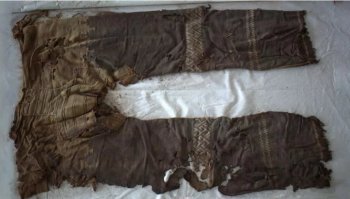
  • Несколько лет назад группа археологов Немецого археологического института наткнулась в западном Китае на два куска шерстяных брюк возрастом около 3300 лет — самых древних из когда-либо найденных. В рамках исследования ученые изучили дизайн и процесс производства этих двух изделий. 

    Археологи наткнулись на останки двух древних брюк в могилах под номерами M21 и M157 на древнем кладбище в Синьцзян-Уйгурском регионе на западе Китая. Очень сухой климат региона сохранил не только тела, но  и несколько предметов одежды, которые когда-то принадлежали двум воинам в возрасте примерно 40 лет. 

    Радиоуглеродный анализ позволяет предположить, что эти два изделия были изготовлены между XIII и X веками до нашей эры. В этом смысле они представляют собой самые древние из известных брюк. Более чем через восемь лет после этого открытия те же исследователи продолжили анализ одной из этих штанин, чтобы больше узнать о ее конструкции. Их работа была опубликована в журнале Quaternary International. Первоначально команда была озадачена тем, как были разработаны брюки, поскольку в ткани не было никаких разрезов. В конце концов, они указали на сочетание трех техник плетения. Если говорить более конкретно, то брюки состояли из трех независимо сотканных кусков ткани. 

    Два из них были почти прямоугольными и располагались с каждой стороны, покрывая всю длину от талии до лодыжки. Третий, в форме креста, расположен в промежности для преодоления разрыва между двумя боковыми частями. Таким образом, процесс изготовления не включал в себя раскрой ткани. Вместо этого куски формировались на ткацком станке до нужного размера под конкретного человека. Кроме того, нитки трех тканей и нитки, используемые для окончательного шитья, совпадают по цвету и качеству. По мнению исследователей, это говорит о том, что ткач и портной были одним и тем же человеком или что эти двое сотрудничали очень слаженно. 

    Одежда, предназначенная для верховой езды Дизайн этих брюк, с прямыми  ногами и широкой промежностью, кажется, предшественником современных брюк для верховой езды. Конское снаряжение и оружие, найденные в обоих захоронениях, также подтверждают эту идею. Носитель, вероятно, был военным. Исследование также показало, что большая часть одежды была изготовлена из саржи. Это многоцелевое переплетение ткани, которое используется в большинстве современных джинсов для придания им большей эластичности. 

    Наконец, на коленной части использовалась техника гобеленового плетения, чтобы изготовить более защитную ткань для суставов. Пояс на талии также был более толстым. Декоративные геометрические узоры также вплетались в колени, лодыжки и икры.

    Источник: New-Science.ru


    Обратная связь

    Рекомендуемые комментарии

    Комментариев нет


×
×
  • Создать...